Category Archives: culture

Pasta Primavera

Standard

Pasta Primavera
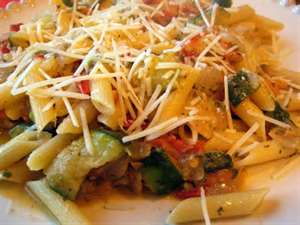
According to my culinary book Food Lover’s Companion, primavera alla [pree-muh-VEHR-uhl] is the Italian phrase which means “spring style”. The Italian dish pasta primavera is an example of this culinary style. Fresh vegetables, are diced or julienne cut either raw, blanched, or lightly sauteed and added to al denta pasta tossed with olive oil and parmigiano-reggiano [pahr-muh-ZHAH-noh reh-zhee-AH-noh], Italy’s premier parmesan cheese. Well, this evening was my turn to cook dinner, as Chef Mick was off with his family with other dinner plans. I thought to make a fresh arugula pizza, but did not have any flour in the house. My low-gluten diet. One way or another I was using the organic baby arugula mix I bought at the store yesterday. Store-bought is not quite as tasteful as the home grown variety, but arugula’s destinctive flavor is what I craved, if you can tell by my previous blog. Spring fever has offically hit! I found a box of multi-grain penne, so I prepared them al dente. My kitchen’s vegetables on hand were lightly sauteed in 2 teaspoons of olive oil + 1 teaspoon of vegetable oil. So here are the ingredients found in Anna Marie’s Pasta Primavera made tonight:
2 Deanna Greens And Garden Art dried jalapeno peppers, hydrated and chopped finely
1/2 cup yellow squash chunks
1/2 cup zucchini squash chunks
3 large button mushrooms, chopped in chunks
1/4 cup fresh baby arugula leaves
1-1/2 teaspoon dried basil leaves
1/2 teaspoon garlic powder
1/4 teaspoon Kosher salt
1/3 cup petite cut tomatoes
1/3 cup + shredded Italian cheese blend
10 oz penne pasta, cooked al dente, drained, coated with 1 teaspoon olive oil

Here are the recipe instructions:
1. Heat both oils in a medium skillet.
2. Add the finely chopped jalepeno peppers to the heated oil; saute for 30 seconds.
3. Add both squash and mushroom chunks to the skillet; saute 3 minutes.
4. Toss in arugula; stir to coat with oil.
5. Toss in basil, garlic powder, and salt; stir.
6. Stir in tomatoes and 1/3 cup cheese.
7. Toss saute vegetables with al dente pasta.
8. Pour into bowls; garnish with additional shredded cheese, if desired.

Sure savored every bite of this dish. Buonanotte!

Texas Tea (Part 1)

Standard

“Texas does not, like any other region, simply have indigenous dishes. It proclaims them. It congratulates you, on your arrival to having escaped from the slop pails of the other 49 states.” ~ Alistair Cooke ~ Quite a bold statement about the culinary creations in Texas considering the wonderful Italian pasta dishes on The Hill in St. Louis to the creamy seafood bisque found along the Oregon coast to the smoked northern pike in Minnesota. Texas is where Dean & I are headed for a mini vacation to inhale some sunshine and reunite with the Gall cousins. The family is celebrating his aunt’s 80th birthday on Saturday. We fly into Dallas/Ft. Worth tomorrow afternoon. So when you think of Texas food, do you think of huge sirloin steaks smothered with spicy BBQ sauce or keg of beer or Tex-Mex chili? Well, I think “Texas tea”. No, not the kind of “Texas tea” from Beverly Hillbillies. I am envisioning seated in a tea room sipping on a cup of rose tea and savoring a freshly baked herb scone surrounded with potted geraniums, English ivy,and lace tablecloths. Why? I am not sure, other than I am a romantic at heart. Don’t get me wrong, I love the outdoor life, earth, farming, critters, blue jeans, and cowgirl boots. But the more refined me, likes to wear a simple floral dress or blouse/skirt duo with a lace sweater and slight heels while visiting a local tea room establishment. So Dean & I will find such a vignette in Arlington/Ft. Worth area this weekend. I will write about our discoveries in “Texas Tea (Part 2)”. Maybe a recipe or two will be revealed as well.
Texas

The Alternative

Standard

So much of our thinking and planning seems to align to conventional practices.  This is in every area of our lives, relationships, career paths, foods we eat, medicines we take, what we spend time with or on, the house we live in, so on and so on.  Break throughs in sciences seem to tell us that some old practices have been the best practices all along.  For instance, the present interstate highway system we have has caused major traffic congestion in the cities, and kept local commerce from growing.  The lecture I attended at Washington University last week where  John Norquist gave the alternative.  Tear down some of those interstates in the city.  Allow secondary arteries, the urban streets to be available for travelers to slow down and visit the city, create more jobs, circulate more commerce, allow pride in the citizens to show off their cultures.   Maybe more walking and biking will be encouraged with sidewalk systems.  Hooray for out-of-the box thinkers!  St. Louis City and County are looking into this option.  What do Milwaukee citizens think about the similar project that took place in their city? 

Then there is the Slow Food movement.   (There is that word “slow” again.)  This started in Europe, Rome, Italy to be exact as a direct statement to the fast food construction plans for a McDonald’s back in 1986.  According to founder and president Carlo Petrini, “everyone has the right to good, clean, and fair food”. That means quality, flavorful food, it is natural form, and produced and tranported in an ethical manner at a fair price.  A person who eats locally, is called a locavore.  Slow Food includes local food.  (There is that word “local” once again.)  Foods grown, produced, and consumed on a local level will support local folks, right?  So this is where Deanna Greens And Garden Art resides.  Local!!!  I cannot wait to get those beds raised and plant some organic seeds for herbs and veggies.  We hope to sell more seedlings to local farmers, and herbs to local farmer’s market folks next spring.  And Dean & I will consume lots of our own homegrown veggies.  Veggies are the alternative to pre-packaged, processed grain products.  Herbs are the alternative to salt and synthetic chemicals the food label lists.  Check out the book Wheat Belly by Dr. William Davis from your local library and see what today’s wheat and corn are doing to our bodies.  Or Dr. Davis has his own blog:  www.wheatbellyblog.com.   An eye opener.  Yes, an alternative diet, yet what we ate like before WWII.  Old practices return.

Dean and I personally shop local as well.  95% of our Christmas gifts are bought locally.  Wine from Chandler Hill Vineyards and foods & crafts from local artisans.  I hope you supported Local Saturday in your community a couple of weeks ago.   Last weekend we slowed our pace down, savored a local beer and satisfied our palettes while listening to local music at our neighborhood joint, the St. Charles Coffee House.     www.saintcharlescoffeehouse.com.   What is your favorite local eatery?  In our travels, Dean & I look for those local joints, and we may visit yours!

Urban Farmers & Their Markets

Standard

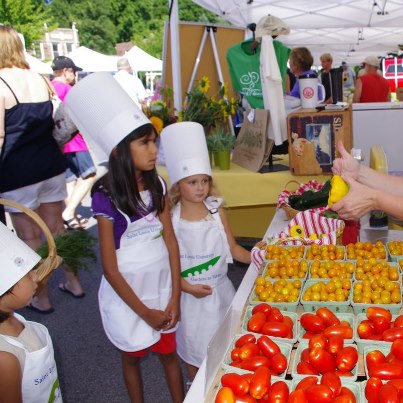
EarthDance Farms is a non-profit organization that grows farmers as well as organic veggies and herbs.  I participated in their freshman program last growing season.  This program is what spurred my husband and I to purchase a greenhouse and created Deanna Greens And Garden Art.  The farm is in the heart of the urban culture of Ferguson, Missouri.  But while farming in the middle of a field, you feel like you are miles from the next neighbor.  The female staff at EarthDance Farms are featured in a recent article “Organic Farming Attracts Women”. Please read about their adventures. http://magissues.farmprogress.com/MOR/MR07Jul12/mor008.pdf magissues.farmprogress.com.  Here is a EarthDance Farms photo taken at the Ferguson Farmers’ Market, as urban and farmer you can get at one time.  Visit there one Saturday morning! http://fergmarket.com/